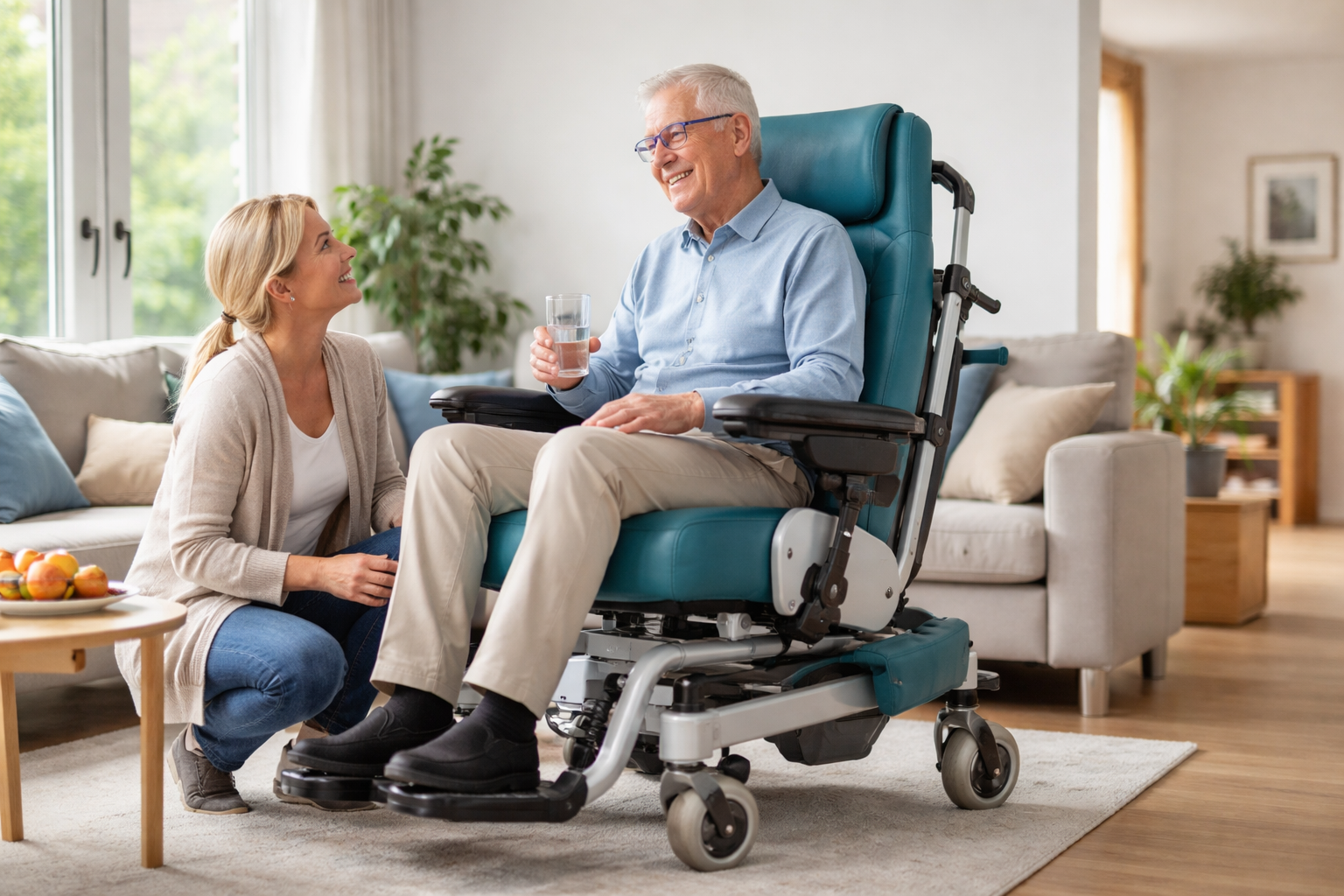
Parkinson’s disease can bring stiffness, tremors, shaking, bradykinesia, and balance issues that turn a normal dining chair or basic office/task chair into a risk point. The best chair for Parkinson’s patients isn’t the softest recliner or the most expensive rise-and-recline chair; it’s the one that makes daily movement safer and easier.
A truly effective seating solution should help the user stay stable during sit-to-stand, reduce sliding, support posture during long sitting, and make routines like mealtimes easier for both the person living with Parkinson’s and their caregivers. In this guide, we’ll explain the key features that matter most and share practical, real-life use cases (mealtimes, bathroom transfers, grooming) so you can match chair features to everyday needs.
This article is for general information and does not provide medical advice. Parkinson’s symptoms and mobility needs vary widely, especially in progressive Parkinson’s disease.
Parkinson’s Chair Needs: Stability, Tilt-in-Space Positioning & Pressure Care
Parkinson’s is a progressive neurological condition. As progressive Parkinson’s disease advances, seating needs tend to increase, not because someone “can’t sit,” but because maintaining posture and safe movement can require more support.
Here’s what matters most:
Stability and Braking: Central Brake, Locking Wheels, and Controlled Roll
A chair should allow the user to move around the home when appropriate, then “park” firmly for standing, sitting, and repositioning. If a chair moves unexpectedly, it creates instant risk, especially when uncontrolled movements or orthostatic hypotension are in the picture.
Look for:
- A reliable brake system (ideally a central brake for multiple wheels)
- A safety brake for transfers and sit-to-stand
- Stability when turning (this is where swivel-lock becomes important)
Tilt-in-Space and Postural Management
For many Parkinson’s patients, posture changes over time; fatigue increases, trunk control can be reduced, and sitting can become less stable. Tilt-in-space can help by keeping the hip angle stable while changing orientation for support and comfort.
Chair features to prioritize:
- Tilt-in-space positioning for stability and fatigue management
- Head supports for rest and alignment
- A lateral support backrest for trunk control
- Focused postural management to support consistent sitting
Pressure Relief and Pressure Redistribution
Long sitting increases the need for pressure care, especially when mobility is limited or when someone sits in the same posture for extended periods. Pressure support isn’t just “softness.” Its alignment + surface design + movement options (like tilt) working together to lower the risk of pressure injuries over time.
What to look for:
- Pressure relief surfaces that reduce peak loading on pressure points
- Pressure relief technology and cushion design that promote pressure redistribution
- A posture-supporting back system to reduce shear and sliding
EMP Living Offers the #1 Mobility Chair Choice for Parkinson’s Patients
At EMP Living, we offer mobility-focused seating solutions that help people stay safer and more independent at home. Our REAL Chairs represent a different kind of mobility chair: an indoor activity and positioning chair built for daily routines. Our chairs are designed to support stable movement, better posture, and easier transfers with features like controlled rolling, reliable braking, and adjustable seat height and tilt.
We focus on specialist seating that supports:
- Controlled roll on wheels for indoor mobility without unwanted drift
- Strong stability features, such as a central safety brake
- Easier transfers with adjustable electric tilt-and-lift features
- Comfort engineered around ergonomics, postural support, and pressure management
Our goal: safer movement without losing independence
The best chair is the one that protects independence, helping someone stay active in their own home routines, with fewer assist-only moments and less fear around daily transitions.
Enhance your mobility, posture, and confidence with the best chair for Parkinson’s disease
Contact Us For More Information
REAL Chairs for Parkinson’s Disease: Real-Life Use Cases
Mealtime Routines
Many families notice Parkinson’s challenges during the mealtime routine first, because eating requires posture, balance, and endurance all at once. A standard dining chair can cause:
- Unstable sitting and sliding
- Fatigue mid-meal
- Increased caregiver help
A better seating solution supports:
- Stable sitting posture for mealtimes
- Easier “pause and reset” without constant repositioning
- Safer standing transitions when meals end
Bathroom Routines & Toilet Transfers
Parkinson’s symptoms can make toilet routines stressful because transfers require controlled movement, balance, and timing. A standard bathroom chair or unstable surface can lead to:
- Rushed sit-to-stand attempts
- Drifting wheels or poor positioning
- Higher fall risk and more caregiver strain
A better seating solution supports:
- Stable positioning near the toilet with reliable braking
- Easier transfers with adjustable seat height and armrests
- Smoother “reset” between steps without constant repositioning
Grooming, Dressing & Morning Setup
Morning routines often expose Parkinson’s challenges because they involve repeated small movements, reaching, and sustained posture. A basic chair can cause:
- Forward slumping and fatigue
- Shaking that makes fine tasks harder
- Frequent repositioning or “assist-only” moments
A better seating solution supports:
- Upright posture for grooming and dressing
- Controlled rolling between sink, closet, and countertop zones
- Safer stand transitions when moving to the next task
Why Ergonomics Matter in Adaptive Seating for Daily Comfort
Parkinson’s Progression Considerations: Dementia, Autonomic Dysfunction, and Day-to-Day Variability
Parkinson’s isn’t only about movement. Some people experience dementia symptoms over time, and many deal with non-motor challenges like autonomic nervous system dysfunction (including orthostatic hypotension).
That’s why the best chair isn’t just comfortable; it’s predictable:
- Stable braking and positioning (less confusion, less drift)
- Supportive posture that reduces sliding and constant corrections
- Intuitive controls and consistent routines that protect independence and reduce frustration
Build a Practical Fall Prevention Plan
A real fall prevention plan often includes:
- Consistent chair placement near stable grab points
- The brakes are always engaged before standing
- Keeping walking aids like a rollator within reach
- Training caregivers on safe movement patterns and transfer steps
Independent Living vs Assisted Living: How to Choose the Right Option
Why EMP Living Is the #1 Chair Choice for Parkinson Patients
At EMP Living, we treat our products as part of daily living, not a standalone recliner purchase.
What Makes EMP Living Different
- Mobility chairs that support controlled movement and stable positioning
- Practical safety systems: for example, a central safety brake for multiple wheels
- Posture-first configuration: enhanced postural support, lateral stability, head supports, and ergonomic alignment
- Comfort design built around pressure management, pressure relief, and long-sit practicality
Contact us to match the right mechanism options to your needs
If you or a loved one requires a chair with particular specifications like tilt-in-space positioning, a central brake, adjustable seat height, pressure management, or transfer-friendly supports, we’ll help you compare configurations and choose the setup that fits your daily routine, home layout, and safety goals.
EMP Living chairs are backed by a 10-year warrantyon welded metal parts, a 2-year warranty on gas springs and electric actuators, and a 1-year warranty on other parts for eligible U.S. purchases through EMP Living.
Best Chair for Parkinson Patients | FAQs
What is the best chair for Parkinson’s patients?
The best chair for Parkinson’s patients supports stability and posture during daily movement. Look for controlled wheels with locking wheels, a central brake, supportive armrests, adjustable seat height, and options like tilt-in-space positioning to reduce sliding and improve comfort during long sitting.
Why is tilt-in-space helpful for Parkinson’s disease?
Tilt-in-space helps maintain a stable hip angle while changing body position for support. It can reduce sliding, improve postural management, and help manage fatigue during long sitting, especially as progressive Parkinson’s disease increases stiffness, tremors, and trunk control challenges.
What chair features reduce fall risk at home?
Prioritize a stable base, reliable braking (ideally a central brake), locking wheels, and predictable controls. Adjustable seat height can improve sit-to-stand mechanics. Pair seating with a fall prevention plan, and keep assistive tools like a rollator within reach when appropriate.
What should caregivers look for in a Parkinson’s chair?
Caregivers should prioritize safety and consistency: stable braking, easy-to-use controls, transfer-friendly armrests, and reliable positioning. If transfers are difficult, the chair should work with assistive tools such as a slide board, standing aids, or patient lifts as needed.